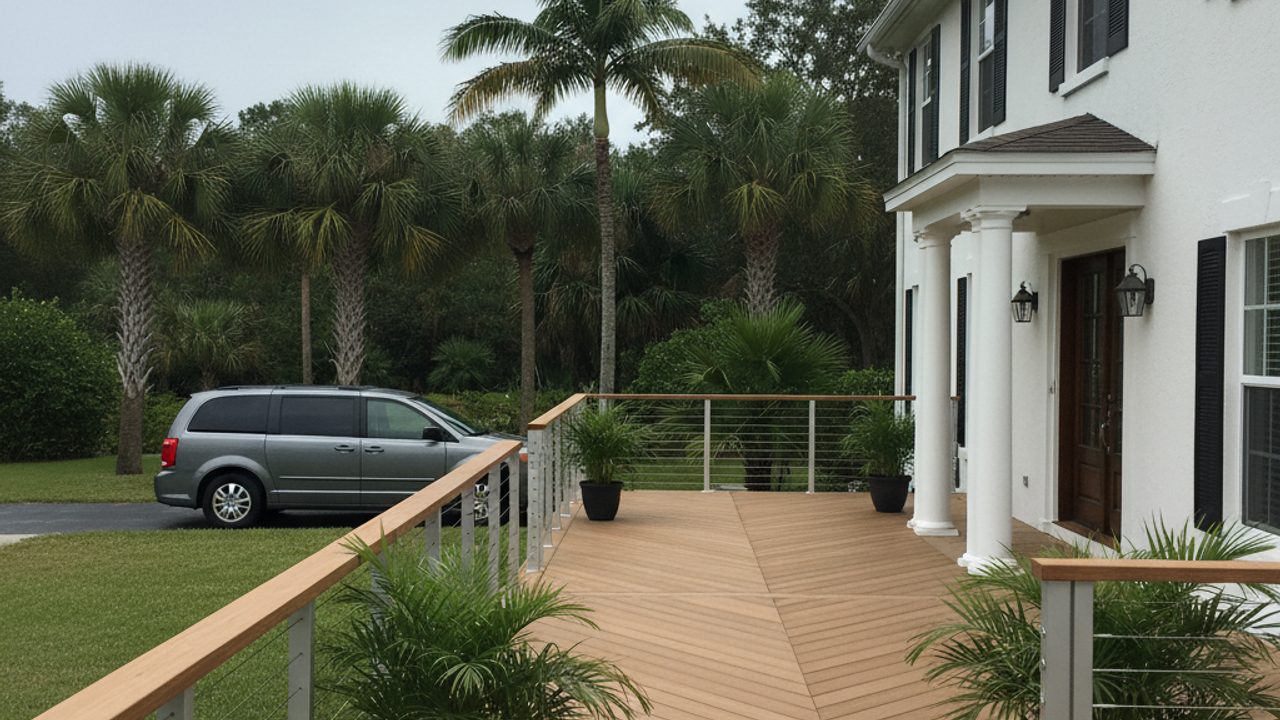
Chaparral sits on caliche and sandy alluvial soil, out in unincorporated Doña Ana County, with summer sun that will bleach a cedar board gray in one season if nobody warns you. That combination changes how a deck should be built here, and it's a big part of why some bids come in low. Cutting a footing four inches short, or skipping flashing because "it doesn't rain much," saves the builder money today and costs you a sagging deck in five years.
What the ground here does to a deck
A lot of Chaparral lots have a caliche layer a foot or two down, that hardpan calcium deposit that's almost like poured concrete when it's dry and turns slick when the monsoon hits in July and August. Digging through it takes a power auger or a bar and a lot of sweat, not a hand shovel, and a builder in a hurry will sometimes set posts shallow just to avoid it. Footings need to sit below frost depth and bear on solid ground, not on loose caliche chunks backfilled around the post. For a typical deck post, that means a footing hole around 10 to 12 inches in diameter, poured with concrete, not just a post jammed into native dirt with dry-mix dumped around it and left to "set" from rain.
The other soil issue is drainage right at the house. Sandy soil moves water fast once it's through the caliche, but grading on a lot that's been sitting for twenty years often slopes toward the foundation instead of away from it. A deck ledger board bolted to the house needs proper flashing behind it, lapped over the house wrap, so water running off the deck doesn't wick into the rim joist. I've seen ledgers rot from the inside out in under ten years because someone lag-bolted straight to the sheathing with no flashing at all.
Permits in Chaparral aren't handled by a city hall
Chaparral isn't incorporated, so there's no local building department to walk into. Permitting for this area runs through Doña Ana County. Most raised decks attached to a house need a permit, and that usually means an inspection of the footings before you pour concrete, and another of the framing before the decking boards go on. A builder who tells you permits aren't needed for a deck over 30 inches high, or who offers to "skip the paperwork to save time," is asking you to take on the liability yourself. If something fails later and there was never an inspection, that's on the homeowner when it's time to sell or file an insurance claim.
Ask whether a setback check is part of their process too. Doña Ana County has minimum distances from property lines, and a lot of Chaparral parcels are larger and less fenced-in than a typical subdivision, which makes it easy to assume there's more room than there is. A quick check against your plat before digging beats moving a deck later.
What a real bid should actually spell out
A one-page estimate that just says "build 12x16 deck, $6,800" tells you nothing. A bid worth signing should list joist size and spacing, something like 2x8 joists at 16 inches on center for most residential spans, and it should name the fastener type. Galvanized nails have no business holding a deck together long term; you want hot-dip galvanized or stainless structural screws and joist hangers rated for exterior use, because ordinary hardware rusts and stains the wood within a couple of years out here.
It should also say what's happening at the ledger, what the footing depth and diameter are, and whether post bases are the metal standoff kind that keep wood off wet concrete, or whether the post is just sitting in the footing itself. None of this is exotic information. Any builder who's actually done deck framing can rattle it off without pausing. If someone gets vague or annoyed when you ask, that's worth noting.
Red flags worth walking away from
- A price that's dramatically lower than two others for the same square footage, with no explanation for the gap.
- No mention of a permit at all, or being told the county "won't care" about a deck this small.
- Cash only, no written contract, no start and finish date.
- A builder who won't tell you the footing depth or joist spacing they're planning to use.
- Pressure to sign the same day, especially paired with a discount that expires that afternoon.
None of these alone means someone's a fraud. Together, they're a pattern.
Wood or composite, and what the sun does to both
Composite decking has gotten a lot better about heat and fading, but it still gets hotter underfoot than wood on a June afternoon in southern New Mexico, and cheaper composite can still fade or chalk after a few years of this UV load. Pressure-treated pine is cheaper up front and needs staining or sealing roughly every two to three years out here, more often on a south-facing deck that takes full sun most of the day. Cedar looks better longer without stain but costs more and still needs some maintenance. There's no wrong answer, but a builder should be telling you the tradeoff instead of just pushing whatever they have a supplier deal on.
Whatever material you land on, the deck is only as good as the frame underneath it, and the frame is only as good as the footings holding it up out of that caliche. If you're weighing bids right now, ask each builder the questions above before price ever comes up. We've done deck builder work across Chaparral long enough to know which shortcuts show up first, usually at the ledger and the footings, and we're glad to walk through what a proper bid looks like even if you end up hiring someone else.