Every job below is one we do ourselves across Chaparral.
We frame new decks with joists on 16 inches on center, sized for the span and the load you actually plan to put on them, like a hot tub or a big table for family dinners. Footings go below where the ground freezes here, not just deep enough to look right. Every ledger board gets flashed before it goes back against your house, because that's where most rot problems start.
Soft spots underfoot, wobbly stair stringers and railings that shift when you lean on them all mean something structural is failing, not just cosmetic. We pull the deck boards to check the joists and ledger board before patching anything on the surface. Sometimes a repair is two boards and an afternoon, sometimes it's the whole substructure, and we'll tell you which one you're looking at before we start.
Chaparral sun bleaches and dries out untreated wood fast, and once it starts cracking and splintering, water gets in behind the fibers. We strip old finish, sand the boards, and apply a stain and sealer rated for high UV exposure. Most pressure-treated decks out here need this every one to two years to keep the wood from checking.
Multi-level decks, built-in bench seating, and shade structures all get drawn up before a single post goes in the ground. We size the framing for whatever you're planning to put on it, whether that's a full outdoor kitchen or just enough room for a grill. You'll see a layout on paper first, so there's no surprise about where the stairs land.
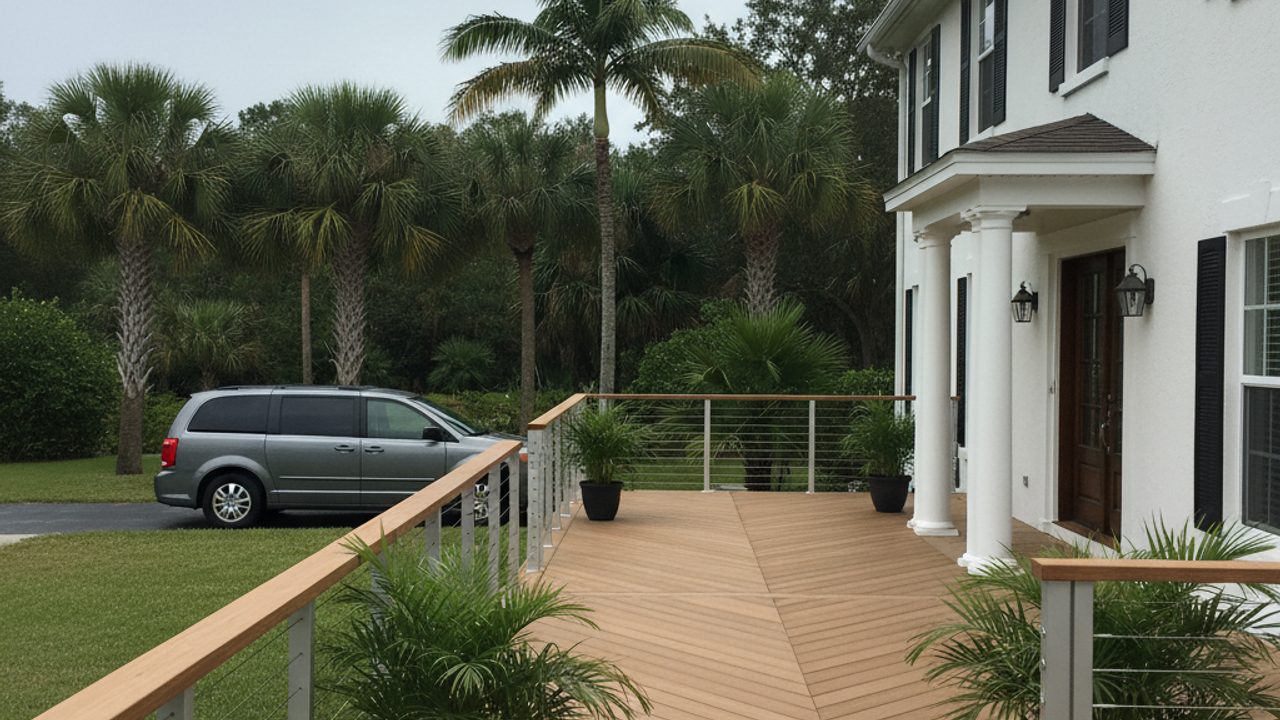
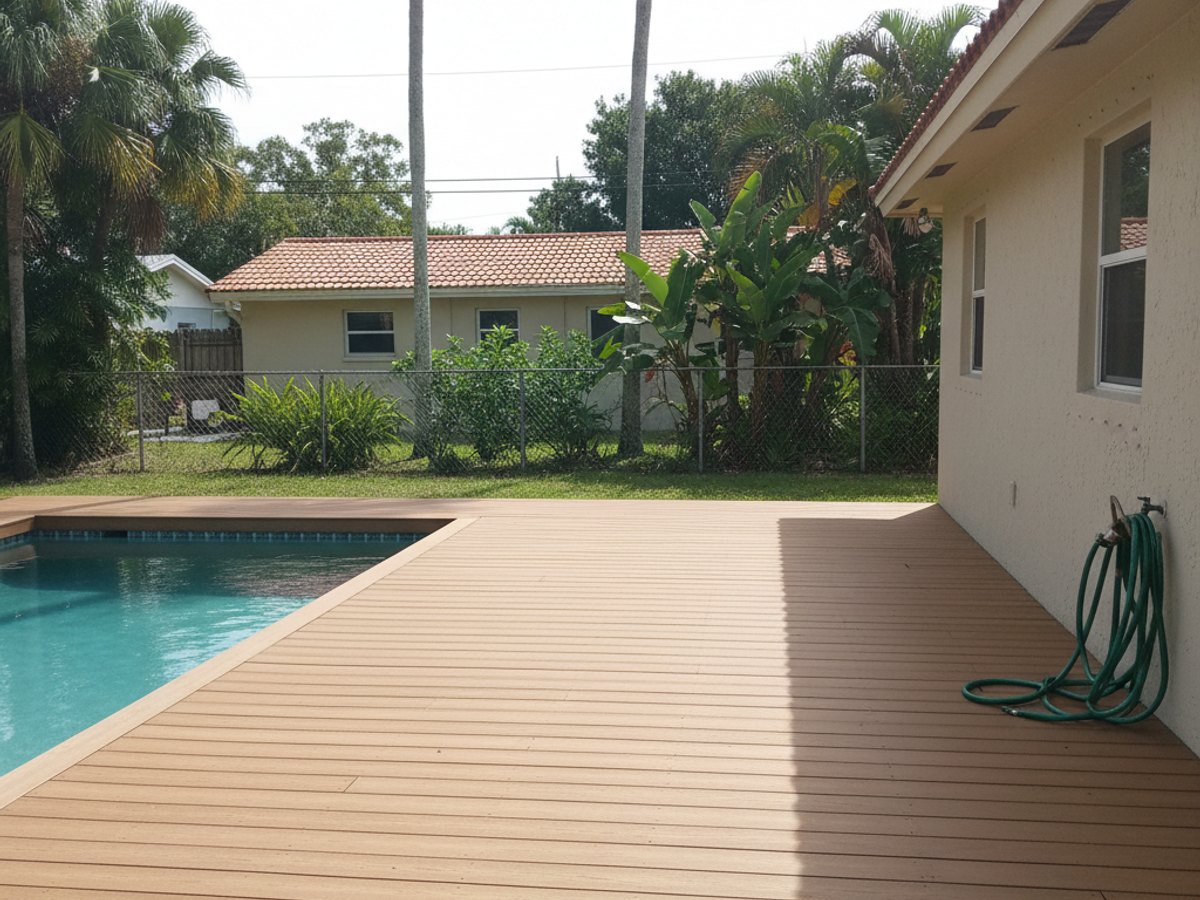
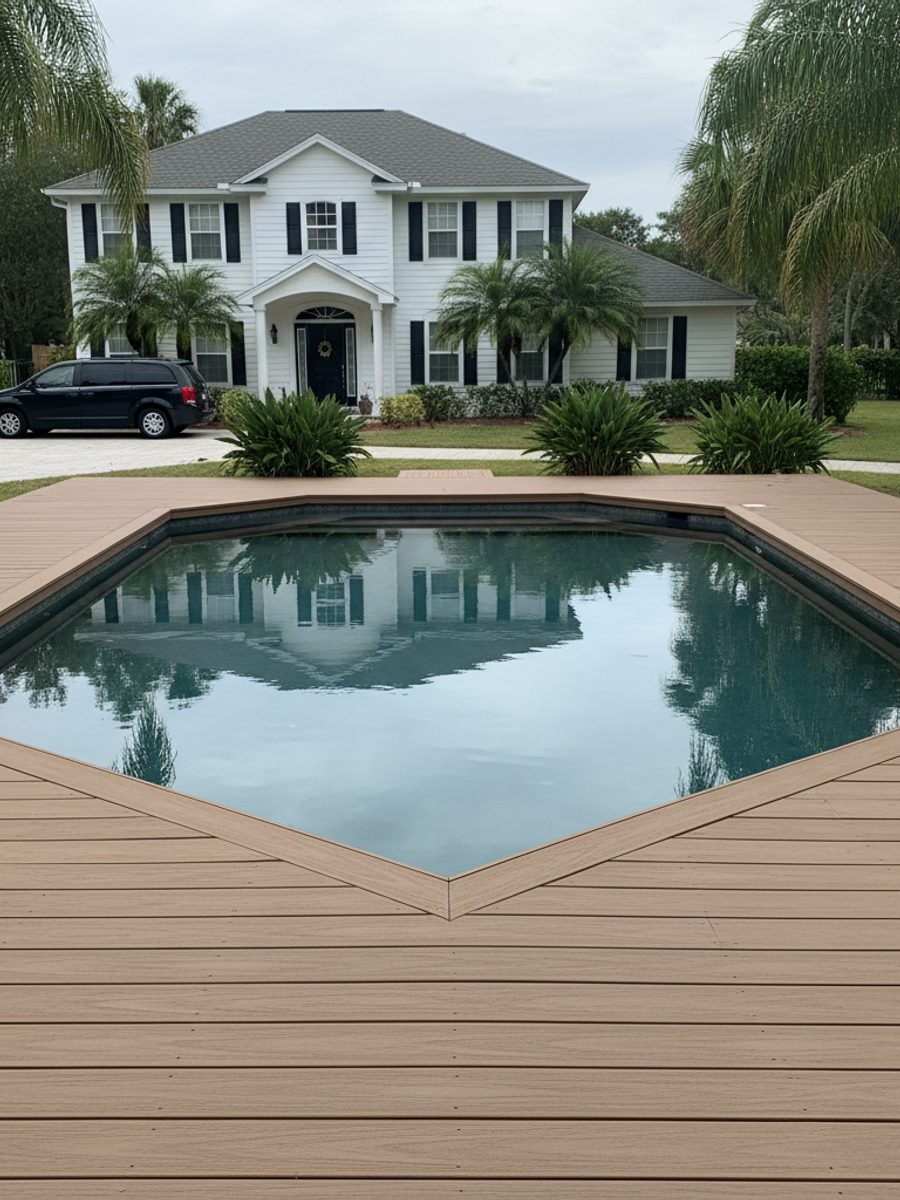
Composite decking like Trex or TimberTech skips the yearly staining, which matters if you're tired of that chore every spring. It still needs proper joist spacing underneath, usually closer than what you'd use for wood, because composite boards flex more between supports. We install hidden fastener systems on most composite jobs so you don't see a screw head anywhere on the surface.
Railings get built to code height, 36 inches for most residential decks, with balusters spaced so a 4-inch ball can't pass through. Loose or wobbly railings usually mean the posts weren't bolted through the rim joist, just screwed to the face of it. We bolt every post through, so the railing holds when someone actually leans on it.
Not every deck needs to come down just because a few boards have cupped or split. We match the board profile and gap spacing to what's already there so replaced sections don't stick out. If more than a third of the boards are failing, we'll say so instead of patching around a bigger problem.
Rot at the ledger board, undersized joists, or footings that were never poured below frost depth all show up as bounce or sag in the deck surface. We open up the structure, replace what's compromised, and bring the framing up to current span tables. This is the part of a deck nobody sees once it's finished, and it's the part that decides how long the deck lasts.
A pergola or shade cover over an existing deck cuts down on how much direct sun hits your furniture and your feet in July. We tie the structure into the existing framing where it can carry the load, or add posts and footings where it can't. Post spacing and beam size depend on the pergola's footprint, so we size it to the job instead of using one stock design.
Old decking, rotted framing and any fasteners left behind get pulled out and hauled off before a rebuild starts. We check the ledger board and any footings still in the ground to see what, if anything, can be reused. Clearing the site properly the first time keeps a new deck from being built on top of old problems.
Four steps, and no surprises in any of them.
You tell us what you want doing, we look at what is actually there, and we ask the awkward questions early.
In writing, itemised, free. If something might add cost later we flag it now rather than at the end.
Same crew throughout. We cover your floors, keep the dust down and tidy up before we leave each day.
You point out anything you are not happy with and we fix it before the invoice, not after.
We take on deck jobs throughout this part of the valley.
Questions that come up once a deck project actually starts.
Describe the problem and we will tell you what it probably is. No obligation.